


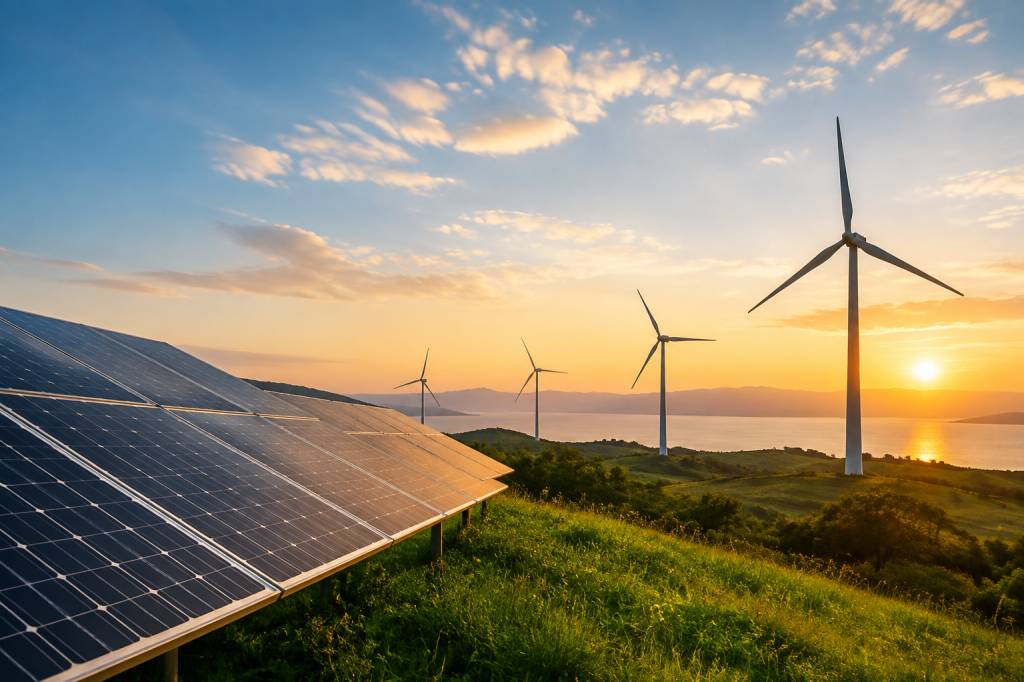
Few numbers have shaped the global energy debate as powerfully as 1.5°C. It is more than a figure in a climate report or a slogan on a conference banner. It is a scientific threshold, a political ambition, and a practical guide for transforming how we produce, transport, and use energy.
For the renewable energy sector, the 1.5°C target has become a demanding compass. It influences investment decisions, national policies, industrial strategies, and even the technologies entering our homes. But what does it actually mean, and why does it matter so much?
As an energy engineer, I see the target as both a warning and an opportunity. The challenge is enormous, but so is the potential to build cleaner, more resilient, and more efficient energy systems.
What does the 1.5°C target mean?
The 1.5°C target refers to limiting the rise in average global temperature to 1.5°C above pre-industrial levels. This ambition was established internationally through the Paris Agreement, adopted in 2015 by nearly every country in the world.
The number represents a global average, not a uniform temperature increase everywhere. Some regions are already experiencing much greater warming, while land areas generally heat faster than oceans. A global rise of 1.5°C can therefore translate into far more severe local impacts, including intense heatwaves, droughts, floods, and ecosystem disruption.
Why 1.5°C rather than 2°C? The difference may sound small, but climate risks do not increase in a small or predictable way. Every additional fraction of a degree can intensify extreme weather and increase pressure on food systems, water resources, public health, and biodiversity.
- More frequent and severe heatwaves
- Higher risks of coastal flooding and sea-level rise
- Greater stress on crops and freshwater supplies
- Accelerated loss of coral reefs and fragile ecosystems
- Increased risks to infrastructure, health, and livelihoods
Keeping warming as close as possible to 1.5°C is therefore not about achieving climate perfection. It is about reducing risks and protecting the greatest number of people and ecosystems from increasingly dangerous conditions.
A rapidly shrinking carbon budget
The atmosphere can absorb only a limited amount of carbon dioxide before global warming reaches a specific level. This remaining allowance is commonly called the carbon budget.
Each year, energy production, transport, buildings, industry, and land-use change add billions of tonnes of greenhouse gases to the atmosphere. The more emissions released today, the less room remains for future emissions. This makes timing critical. Waiting for a perfect technology or a more convenient political moment is not a neutral decision; it consumes part of the remaining carbon budget.
Climate science shows that reaching net-zero carbon dioxide emissions is essential for stabilizing global temperatures. Net zero does not mean that every activity produces no emissions. It means that remaining emissions are balanced by reliable removals, such as natural carbon uptake or carefully managed technological solutions.
For a 1.5°C pathway, global emissions must fall rapidly during this decade, with deep reductions across all major sectors. The exact pathway will vary by country and region, but the direction is clear: emissions must peak, decline sharply, and eventually reach net zero.
Why renewable energy is central to the target
The energy sector remains one of the largest sources of global greenhouse gas emissions. Coal, oil, and natural gas still provide most of the world’s electricity, heat, transport fuels, and industrial energy. Replacing these sources is one of the fastest ways to reduce emissions at scale.
Renewable energy technologies are central to this transformation because they generate energy from sources that naturally replenish, including sunlight, wind, water, geothermal heat, and sustainable biomass.
Solar photovoltaic and wind power have become especially important. Their costs have fallen dramatically over the past decade, and deployment is accelerating in many markets. A solar panel does not burn fuel when producing electricity. A wind turbine does not require a continuous supply of coal or gas. These simple facts have profound implications for energy security and climate action.
Renewables also offer flexibility in how energy systems are designed. Large utility-scale projects can supply cities and industrial facilities, while distributed systems can serve homes, farms, businesses, and remote communities. In areas with limited access to centralized grids, solar-powered mini-grids and battery systems can provide electricity without waiting years for major infrastructure projects.
However, renewable energy is not a magic switch. Building a reliable clean energy system requires better grids, energy storage, demand management, efficient buildings, responsible mineral supply chains, and strong public planning. The transition is an engineering challenge as much as it is an environmental one.
Electrification: the quiet revolution
One of the most important changes linked to the 1.5°C target is the electrification of sectors that have traditionally relied on fossil fuels.
Electric vehicles are a visible example. When powered by a low-carbon electricity mix, they can significantly reduce lifecycle emissions compared with conventional petrol or diesel vehicles. Heat pumps offer another major opportunity. Instead of generating heat by burning fuel, they move heat from the air, ground, or water into a building. In many climates, this makes them several times more efficient than traditional heating systems.
Industry is more complex. Steel, cement, chemicals, shipping, and aviation require high temperatures or energy-dense fuels that cannot always be replaced by direct electrification. This is where green hydrogen, sustainable fuels, energy efficiency, and low-carbon industrial processes become important.
Electrification works best when it is combined with a cleaner power supply. Replacing a petrol car with an electric vehicle is helpful, but charging it with electricity generated mostly from coal limits the benefits. The strongest climate strategy is therefore a coordinated one: expand renewables while improving efficiency and shifting end uses toward clean electricity.
The role of energy efficiency
Clean energy discussions often focus on producing more renewable power. Yet the cheapest and cleanest unit of energy is frequently the one that is never used.
Energy efficiency can reduce emissions quickly while lowering costs for households and businesses. Better insulation, efficient appliances, smart controls, industrial optimization, and improved urban design all reduce energy demand without necessarily reducing comfort or productivity.
Consider a poorly insulated home. In winter, much of the energy used for heating escapes through walls, windows, and roofs. Installing insulation may appear less exciting than building a wind farm, but it can deliver immediate benefits: lower bills, improved comfort, and reduced pressure on the electricity grid.
Digital technologies are making efficiency even more dynamic. Smart meters, connected thermostats, artificial intelligence, and industrial monitoring systems can help consumers and operators understand when and where energy is being used. With the right safeguards, data can become a practical tool for reducing waste.
Managing intermittency without losing reliability
A common question about solar and wind power is straightforward: what happens when the sun is not shining or the wind is not blowing?
The answer is not a single technology. Reliable renewable energy systems use a portfolio of solutions:
- Battery storage for short-term balancing and peak demand
- Hydropower and pumped storage where geography allows
- Stronger electricity connections between regions
- Flexible demand from buildings, vehicles, and industry
- Reliable low-carbon generation, including geothermal and sustainable bioenergy
- Long-duration storage for periods of low renewable production
Electric vehicles can also become part of this system. Most cars remain parked for many hours each day. Smart charging can encourage drivers to charge when renewable electricity is abundant, reducing pressure on the grid. In the future, vehicle-to-grid systems could allow parked cars to return some electricity to the network when needed.
The goal is not to make every hour of electricity production identical. It is to design a flexible system that matches supply and demand over minutes, days, and seasons.
Climate action must be fair
The transition to a 1.5°C-compatible economy is not only a technical project. It is also a social and economic transformation.
Countries and communities have contributed very different amounts to historical emissions, and they do not have equal financial or technological resources. At the same time, vulnerable populations are often the most exposed to climate impacts. A fair transition must recognize these differences.
For households, climate policies should not simply add costs without offering alternatives. Renovation programs, public transport, affordable clean electricity, and targeted financial support can make the transition more accessible. Workers and regions dependent on coal, oil, or gas also need training, investment, and credible pathways toward new employment.
Renewable energy projects should involve local communities from the beginning. Consultation, transparent planning, fair compensation, and shared economic benefits can improve public support and lead to better outcomes. A solar farm or wind project should not be treated as something imposed on people; it should be developed with them.
Innovation beyond the laboratory
Meeting the 1.5°C target will require innovation, but innovation is not limited to futuristic machines. It also includes business models, policies, materials, construction methods, and social practices.
Green hydrogen may help decarbonize sectors where direct electrification is difficult. Advanced batteries could improve electric mobility and grid flexibility. Carbon capture may have a role in certain industrial processes, especially where unavoidable emissions remain. New materials could reduce the environmental impact of solar panels, turbines, batteries, and buildings.
Yet technology alone cannot solve the climate challenge. A highly efficient device is useless if it is never deployed. The most valuable innovation is often the one that can be manufactured affordably, installed quickly, maintained locally, and adopted by millions of people.
This is why policy matters. Clear emissions standards, stable renewable energy incentives, investment in research, public procurement, and reliable carbon accounting can move promising solutions from pilot projects into everyday use.
What businesses and individuals can do
Governments and large industries have a decisive role, but climate action is not reserved for policymakers. Businesses and individuals influence demand, investment, and social expectations.
Companies can begin by measuring their energy use and emissions, improving efficiency, purchasing renewable electricity, electrifying vehicle fleets, and examining emissions throughout their supply chains. A credible climate strategy should include measurable targets and transparent reporting rather than vague promises.
Individuals can reduce energy consumption, choose efficient appliances, improve home insulation, use public transport when practical, and consider low-carbon heating or mobility options. Food choices, consumption habits, and support for responsible businesses also matter.
No single action will keep warming below 1.5°C. But millions of practical decisions can accelerate market transformation, especially when supported by effective infrastructure and public policy. The point is not to pursue personal perfection. It is to make lower-carbon choices easier, more affordable, and more normal.
Turning a global target into practical momentum
The 1.5°C target can feel distant because it describes a planetary average. Its consequences, however, are local: the temperature of a workplace, the price of food, the reliability of a power supply, or the safety of a coastal neighborhood.
Renewable energy, efficiency, electrification, storage, and climate-resilient infrastructure offer practical ways to respond. Progress is already visible, but the pace must increase. Every new clean energy project, efficient building, electric bus, restored ecosystem, and well-designed policy contributes to a wider transformation.
The task ahead is demanding, but it is not abstract. Engineers are designing smarter grids. Communities are producing their own electricity. Businesses are rethinking industrial processes. Citizens are changing how they travel, heat their homes, and use resources.
The question is no longer whether a clean energy transition is possible. The more urgent question is how quickly, fairly, and intelligently we can deliver it. The answer will shape the climate future—and the quality of life—for generations to come.