
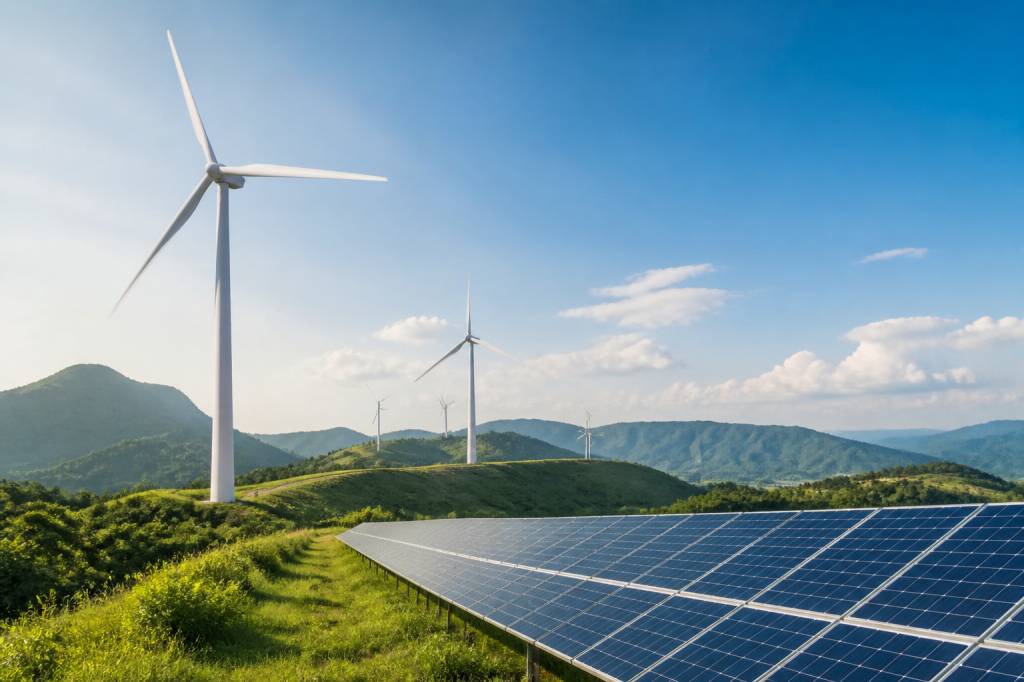
The 17 Sustainable Development Goals (SDGs) are often presented as a global to-do list for humanity: end poverty, protect the planet, improve health, expand access to education, and build resilient economies. Ambitious? Absolutely. Necessary? Even more so. But among all these goals, renewable energy plays a special role because it touches so many of them at once. It is not just about swapping coal for solar panels. It is about creating a system where climate action becomes practical, scalable, and economically sensible.
For a blog focused on industry, energy, and innovation, the connection is hard to ignore. If you want cleaner air, stronger communities, more reliable infrastructure, and real progress on climate action, renewable energy is one of the most powerful tools on the table. It is the backbone of decarbonization, but it also supports social progress in ways that are easy to overlook.
Why renewable energy matters across the SDGs
The SDGs are interconnected. That sounds like a buzzword until you look at the reality: energy affects health, jobs, water access, food production, education, and economic growth. When electricity comes from low-carbon sources such as solar, wind, hydropower, geothermal, or sustainable bioenergy, the benefits spread far beyond emissions reduction.
Think about it this way: renewable energy is not only a climate solution, it is a systems solution. It can lower household energy bills, power hospitals, support schools, improve industrial efficiency, and reduce dependence on volatile fossil fuel markets. That is why climate action cannot be separated from energy transition. They are two sides of the same coin.
How renewable energy drives climate action in practice
Climate action is sometimes described in abstract terms, but renewable energy gives it something concrete to work with. Instead of talking only about reducing emissions in the future, we can deploy technologies today that immediately cut the carbon intensity of electricity, transport, heating, and industry.
Here are a few of the most direct ways renewable energy accelerates climate action:
That last point matters. Without clean electricity, many decarbonization strategies simply stall. You can switch to electric vehicles, heat pumps, and smart industrial processes, but if the grid is still heavily fossil-based, the climate gains are limited. Renewable energy makes those transitions meaningful.
SDG 7: affordable and clean energy is the engine of the transition
Goal 7 is the most obvious match. It calls for access to affordable, reliable, sustainable, and modern energy for all. Renewable energy sits at the center of this objective. Solar mini-grids in remote regions, wind farms connected to national networks, and decentralized storage systems are already expanding access in places where traditional grid extension is too slow or too expensive.
There is also a practical advantage: renewable technologies are becoming increasingly competitive. In many markets, solar and wind are now among the cheapest sources of new electricity generation. That matters because climate action is only durable when it is financially viable. If a clean solution is also the cheapest solution, adoption tends to follow faster than any policy brochure could dream of.
SDG 13: climate action needs clean energy at scale
Goal 13 is the most direct link to the climate crisis. Reducing emissions requires structural change, and energy systems are responsible for a huge share of global emissions. Shifting to renewable electricity is one of the fastest ways to cut that footprint.
But climate action is not just about emissions. It is also about adaptation, resilience, and reducing vulnerability. Renewable energy can help in all three areas. Distributed solar plus battery storage can keep critical services running during grid disruptions. Microgrids can support communities exposed to extreme weather. Renewable-powered water systems can improve resilience in drought-prone areas.
In short, clean energy is not only part of the mitigation story. It is also part of the adaptation story. And that is where the SDGs become real-world policy rather than a poster on the wall.
SDG 3 and SDG 11: healthier people, healthier cities
Burning coal, oil, and gas does not just warm the planet. It also pollutes the air. That pollution has a measurable human cost: respiratory illness, cardiovascular disease, premature deaths, and higher healthcare burdens. Renewable energy helps reduce those impacts by replacing combustion with clean power.
In cities, this matters even more. Urban areas concentrate traffic, buildings, and industry, which means they also concentrate emissions. Electrified public transport, cleaner building systems, and renewable electricity can significantly improve air quality. Imagine a city where the morning commute does not involve a cloud of exhaust. Not exactly science fiction, just better planning.
There is also a mental and social dimension. Cleaner, quieter cities tend to be more livable. That supports Goal 11, sustainable cities and communities, by improving mobility, public health, and overall quality of life.
SDG 8 and SDG 9: green jobs and industrial innovation
Renewable energy is often framed as an environmental issue, but it is also an industrial one. Goal 8 focuses on decent work and economic growth, while Goal 9 highlights industry, innovation, and infrastructure. The energy transition is creating opportunities in engineering, manufacturing, construction, software, grid services, maintenance, and recycling.
For workers and communities, the key challenge is not whether change will happen, but how it will be managed. That is why training, reskilling, and local value creation are essential. A solar plant does not build itself, and a smart grid does not optimize itself. It takes technicians, engineers, planners, and operators.
Some of the most promising developments are happening where industry and clean energy meet:
These are not niche experiments anymore. They are becoming core components of competitive industrial strategy.
SDG 6 and SDG 12: cleaner energy supports cleaner water and smarter resource use
Energy and water are deeply connected. Water is needed to generate energy, and energy is needed to treat, pump, and desalinate water. Renewable energy helps reduce pressure on water systems, especially when compared with thermal power plants that require large volumes of cooling water.
In water-stressed regions, solar-powered pumping and treatment can improve access while lowering emissions. This can be especially useful in rural communities or developing economies where centralized infrastructure is limited.
Renewables also support Goal 12, responsible consumption and production, by encouraging more efficient use of materials and resources. Of course, no energy technology is impact-free. Solar panels, wind turbines, and batteries all require minerals, manufacturing, and end-of-life planning. That is exactly why circular economy thinking matters. Better recycling, longer product lifetimes, and smarter design are essential if we want clean energy to stay truly sustainable.
SDG 2: energy transition and food systems are more connected than they look
At first glance, renewable energy and zero hunger may seem like separate conversations. They are not. Food systems depend on energy for irrigation, fertilizer production, cold storage, processing, and transport. In many regions, especially rural ones, unreliable energy directly affects food losses and food security.
Renewable energy can help in several ways:
When farmers and food businesses can rely on stable, affordable energy, they are better equipped to protect yields, reduce waste, and improve supply reliability. That is climate action with a very practical outcome: more resilient food systems.
SDG 4 and SDG 5: education and equality depend on access to energy
Education outcomes improve when schools have electricity. That sounds obvious, but in many parts of the world it is still a challenge. Reliable power enables lighting, digital learning, internet access, and better facilities. Renewable energy can bring these benefits to schools that are far from the main grid.
For Goal 5, gender equality, energy access can be transformative. In many households and communities, women and girls are disproportionately affected by energy poverty because they spend more time gathering fuel, managing household energy needs, or coping with the consequences of poor infrastructure. Clean, reliable energy can reduce these burdens and open opportunities for education, entrepreneurship, and leadership.
This is where technology meets human impact. A solar home system is not just a technical asset. It can mean more study time, safer evening activities, and more productive work hours. Small change? Not when it scales across millions of households.
What renewable energy looks like on the ground
It is easy to talk about SDGs in the abstract. It is more useful to see how renewable energy shows up in real life. A wind farm in a coastal region can provide clean power to nearby industry and communities. Rooftop solar on warehouses can reduce peak demand and operating costs. A battery-backed microgrid can keep a clinic running during a storm. A geothermal plant can deliver stable baseload power in a volcanic region with local resources.
One particularly powerful example is the hybrid microgrid. Combining solar, storage, and sometimes wind or backup generation, these systems can supply remote communities with reliable electricity while reducing diesel dependence. For many places, this is not just a cleaner option. It is the first genuinely dependable one.
That reliability is crucial. People do not build their lives around good intentions. They build them around systems that work.
Policy, finance, and innovation: the real levers of scale
If renewable energy is so effective, why is the transition not already complete? The short answer: scale takes policy, capital, and execution. Technology alone is not enough.
To accelerate climate action through renewable energy, we need:
Emerging markets, industrial clusters, and city governments all have different needs, but the principle is the same: the transition happens faster when systems are designed to reward clean energy instead of protecting old infrastructure by default.
The bigger picture: renewable energy as a multiplier for the SDGs
It is tempting to treat each SDG as a separate box to tick. In reality, renewable energy acts more like a multiplier. It strengthens progress in health, education, jobs, water, cities, industry, and climate action simultaneously. That is what makes it such a powerful lever for sustainable development.
And unlike many global challenges, this one has a clear direction of travel. Clean technologies are improving. Costs are falling. Storage is advancing. Grids are getting smarter. Businesses are increasingly integrating decarbonization into strategy rather than treating it as public relations. That momentum matters.
The question is no longer whether renewable energy can support climate action. It already does. The real question is how fast we can scale it, integrate it, and make sure the benefits reach everyone—not just the places with the best sunshine or strongest wind patterns.
Because if the SDGs are the destination, renewable energy is one of the most reliable routes we have. It does not solve everything on its own, but it makes almost every solution easier to reach. And in the race against climate change, that is a very strong place to start.


More Stories
Sustainable construction material for greener and more resilient buildings
Biotechnology on agriculture: advancing sustainable farming and food security
1.5 centigrade: the global climate target shaping renewable energy and climate action