


The buildings we live and work in shape far more than skylines. They influence energy demand, resource consumption, indoor health, climate resilience, and the emissions generated long before a heating system is switched on. As cities expand and extreme weather becomes more frequent, construction needs to deliver more than attractive façades and low operating costs. It must create buildings that are both greener and more resilient.
That shift begins with the materials themselves. Concrete, steel, glass, timber, insulation, and finishes all carry environmental impacts linked to extraction, manufacturing, transport, maintenance, and disposal. The good news is that architects, engineers, manufacturers, and homeowners now have a growing range of lower-impact alternatives.
But choosing a sustainable material is not simply a matter of picking the product with the most impressive label. A material must also be durable, safe, affordable, locally appropriate, and capable of performing under future climate conditions. In other words, the greenest material is often the one that performs well for decades rather than needing replacement after a few rainy seasons.
Why construction materials matter so much
The construction sector is responsible for a significant share of global energy use and greenhouse gas emissions. Much of this impact comes from the operation of buildings, including heating, cooling, lighting, and ventilation. Yet the materials used to construct and renovate them also create a substantial “embodied carbon” footprint.
Embodied carbon includes emissions associated with:
- Extracting raw materials such as limestone, sand, timber, and metals
- Processing and manufacturing construction products
- Transporting materials to factories, sites, and buildings
- Constructing, repairing, and replacing components
- Demolishing buildings and managing waste at the end of their service life
A highly efficient building can therefore still have a considerable climate impact if it contains carbon-intensive materials or requires frequent replacement. This is why modern sustainable design looks at the entire life cycle of a building rather than focusing only on its monthly energy bill.
Low-carbon concrete: reducing the footprint of a familiar material
Concrete remains one of the most widely used construction materials in the world. It is strong, versatile, fire-resistant, and relatively affordable. However, conventional cement production is highly emissions-intensive because it requires both high-temperature processing and the chemical transformation of limestone.
Replacing all concrete is neither realistic nor necessarily desirable. Foundations, bridges, flood defenses, and high-rise structures often depend on its strength. The more practical approach is to reduce the carbon intensity of concrete through better formulations and more efficient design.
Several solutions are already available:
- Supplementary cementitious materials: Fly ash, ground granulated blast-furnace slag, calcined clay, and other mineral additions can replace part of traditional clinker.
- Recycled aggregates: Crushed concrete from demolished buildings can sometimes be reused in new mixes.
- Optimized structural design: Using only the amount of concrete required can significantly reduce material consumption.
- Carbon capture and mineralization: Some technologies capture carbon dioxide and store it within concrete products.
- Low-carbon binders: New cement chemistries aim to deliver comparable performance with fewer emissions.
The important detail is that performance still matters. A lower-carbon mix must meet structural, moisture, durability, and safety requirements for its intended application. Sustainable engineering is not about sacrificing reliability; it is about achieving reliability with fewer resources.
Timber and engineered wood: storing carbon in the structure
Wood is a renewable material that can store carbon absorbed by trees during their growth. When sourced from responsibly managed forests and used in long-lasting buildings, timber can contribute to lower embodied emissions. It is also lighter than concrete and steel, which can reduce transport energy and foundation requirements.
Modern engineered wood products have expanded the possibilities of timber construction. Cross-laminated timber, glue-laminated timber, laminated veneer lumber, and other systems can form walls, floors, beams, and entire structural frames.
These products offer several advantages:
- Lower structural weight and potentially simpler foundations
- Fast, precise installation using prefabricated components
- Warm and visually appealing interior spaces
- Potential carbon storage over the building’s service life
- Reduced construction noise and waste on certain projects
Still, timber is not automatically sustainable. Responsible sourcing is essential. Forests must be managed in ways that protect biodiversity, soil health, water cycles, and local communities. Designers must also account for fire safety, moisture control, insects, and long-term maintenance.
A timber building is not a giant wooden battery that solves climate change by itself. Its environmental value depends on where the wood comes from, how long it remains in use, and what happens when the building is renovated or dismantled.
Bamboo: rapid growth with important design requirements
Bamboo has attracted attention as a renewable construction material because some species grow remarkably quickly and can produce strong, lightweight fibers. It has been used traditionally in housing, bridges, scaffolding, and furniture across many regions.
With modern treatment and engineering, bamboo can be transformed into panels, beams, flooring, and structural components. Its rapid growth makes it an interesting option in areas where it can be cultivated responsibly and processed close to construction sites.
However, bamboo requires careful treatment against moisture, fungi, and insects. Transport can also undermine its environmental benefits if it is shipped thousands of kilometers for a project that could use local materials. As with timber, the question is not simply “Is bamboo renewable?” but “Is this bamboo appropriate, durable, and responsibly sourced for this project?”
Earth, hemp, and straw: traditional materials with modern potential
Some of the most promising sustainable materials are not new at all. Earthen construction, including rammed earth, adobe, and compressed earth blocks, has been used for centuries. These materials can offer excellent thermal mass, helping indoor temperatures remain more stable between day and night.
Earth-based walls may also require less processing than industrial materials, especially when suitable soil is available locally. Their performance depends on climate, detailing, drainage, and protection from persistent water exposure. A well-designed earthen wall can be durable; a poorly protected one can become an expensive mud sculpture.
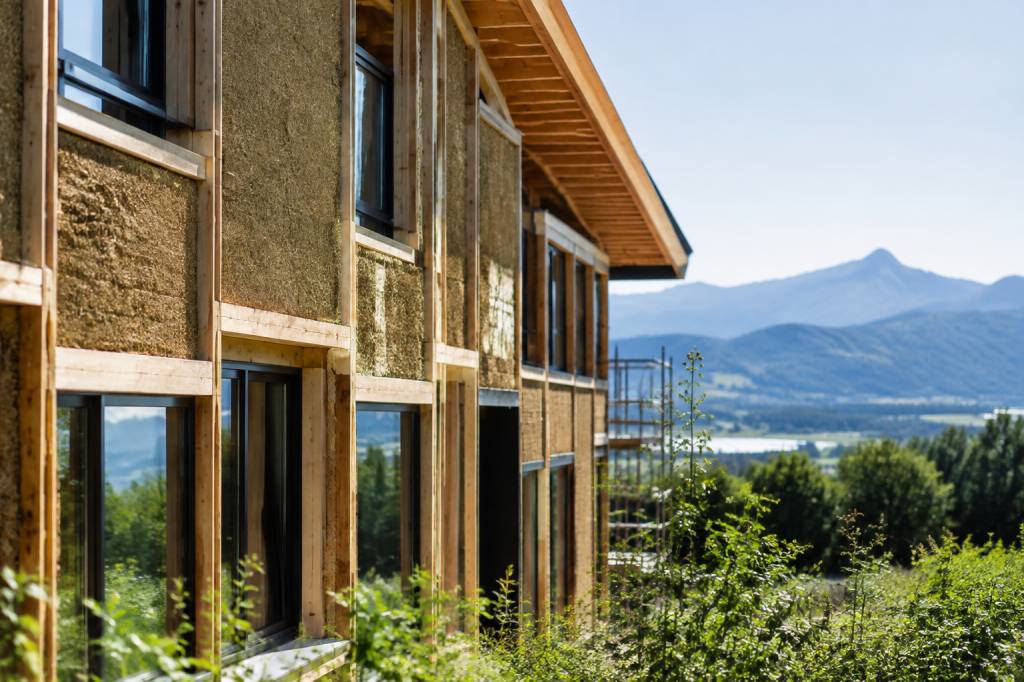
Plant-based materials such as hempcrete and straw bales are also gaining interest. Hempcrete, made from hemp shiv and a mineral binder, is lightweight, breathable, and useful for insulation and infill. Straw bales can provide strong thermal performance when kept dry and integrated into a suitable wall system.
These materials are particularly attractive for low-rise buildings and deep energy renovations. They can reduce reliance on petrochemical insulation and support agricultural economies. Yet building codes, installer expertise, moisture management, and supply chains must be considered before specifying them at scale.
Recycled and reused materials: treating buildings as material banks
The most sustainable building component may be the one that already exists. Reusing bricks, structural steel, doors, windows, tiles, and interior fittings avoids the extraction and manufacturing of replacements. It also preserves the energy and labor already invested in the original product.
Recycled steel is a strong example. Steel can be recycled repeatedly without losing its fundamental properties, and using electric arc furnaces powered by renewable electricity can further reduce emissions. Reclaimed steel sections may also be reused directly, although testing and certification are required for structural applications.
Reclaimed bricks can bring character to a renovation while reducing demolition waste. Recycled glass can become tiles, countertops, insulation, or aggregate. Recycled plastic can be incorporated into certain products, although designers must assess fire safety, chemical content, microplastic risks, and end-of-life options.
Designing for disassembly makes future reuse easier. Mechanical fasteners, accessible connections, material passports, and standardized components allow buildings to be repaired or taken apart instead of demolished with a cloud of dust and a very large skip.
Insulation: the quiet hero of building performance
Few materials have a greater effect on operational energy demand than insulation. A well-insulated building needs less energy to stay warm in winter and cool in summer. It also improves comfort by reducing cold surfaces, drafts, and temperature fluctuations.
Common lower-impact insulation options include:
- Cellulose made from recycled paper
- Wood fiber boards and batts
- Sheep’s wool
- Hemp and flax fibers
- Cork
- Recycled cotton and textile fibers
- Expanded or foamed mineral-based products with lower-impact formulations
The right choice depends on thermal conductivity, moisture behavior, fire resistance, acoustic performance, installation quality, and local availability. Even the best insulation cannot compensate for gaps, compression, thermal bridges, or poor air sealing. In building physics, small details can have surprisingly large consequences.
Insulation should also be selected with a changing climate in mind. Buildings may need to manage more frequent heatwaves, intense rainfall, and higher humidity. Materials that perform well in one climate may require different assemblies or protection in another.
Bio-based finishes and healthier interiors
Sustainability does not stop at the structure or the insulation. Paints, adhesives, flooring, cabinetry, and sealants can affect indoor air quality and maintenance requirements.
Low-emission paints and adhesives help reduce volatile organic compounds indoors. Natural linoleum, sustainably sourced wood, recycled tiles, and mineral-based finishes can provide durable alternatives to products that rely heavily on virgin petrochemicals.
Material transparency is increasingly important. Environmental Product Declarations, life-cycle assessments, and ingredient disclosures can help project teams compare products more fairly. These tools are not perfect, but they are more useful than vague claims printed in green lettering on a package.
Durability should remain central. A finish that needs replacing every five years may have a higher total impact than a slightly more energy-intensive product that lasts for several decades.
Designing for resilience, not just efficiency
A greener building must also be prepared for disruption. Resilience means maintaining safety and essential functions during heatwaves, storms, floods, power outages, and supply interruptions.
Material choices can support resilience in practical ways:
- Use moisture-tolerant assemblies in flood-prone or humid areas
- Select finishes that can be cleaned, repaired, or replaced after water damage
- Choose non-combustible or fire-resistant materials where wildfire risk is increasing
- Use thermal mass and high-performance insulation to reduce overheating
- Design roofs and façades to withstand stronger wind and heavier rainfall
- Specify locally available materials to reduce dependence on fragile supply chains
Resilience also includes social and economic factors. A building that is technically efficient but unaffordable to maintain will not deliver a sustainable outcome. Simple systems, accessible repairs, and locally available skills can be just as important as advanced technology.
How to choose the right sustainable material
There is no universal winner. A material that works beautifully in a coastal renovation may be unsuitable for a dry, wildfire-prone region. Project teams should evaluate each product within its full context.
A useful decision process includes:
- Define the performance requirements: structure, insulation, fire, moisture, acoustics, and lifespan
- Compare life-cycle emissions rather than focusing only on manufacturing
- Prioritize local and responsibly sourced materials where possible
- Assess repair, maintenance, reuse, and end-of-life pathways
- Check certifications, declarations, and product transparency
- Consider labor skills, construction methods, and budget constraints
- Model performance under future climate conditions
Architects and engineers can also reduce impact through material efficiency. Smaller floor areas, adaptable layouts, renovation instead of demolition, and passive design strategies often deliver larger benefits than simply swapping one product for another.
A building industry ready for a material transition
Sustainable construction materials are moving from niche experiments into mainstream practice. Low-carbon concrete, engineered timber, recycled products, bio-based insulation, and circular design are already being used in schools, offices, housing, and infrastructure projects around the world.
The next step is to connect these solutions with better policies, stronger supply chains, updated building codes, and more training for construction professionals. Manufacturers must provide transparent data. Designers must specify products based on performance rather than fashion. Clients must value long-term resilience instead of the lowest initial price.
Every building is a long-term decision. The materials selected today may remain in service for 50, 80, or even 100 years. Choosing them carefully is therefore an investment in energy security, public health, climate adaptation, and resource efficiency.
The greener building of the future will not depend on one miracle material. It will combine thoughtful design, efficient structures, renewable energy, durable components, circular thinking, and a clear understanding of local conditions. That may sound less glamorous than a futuristic gadget, but it is far more powerful: a building that wastes less, lasts longer, and continues to protect its occupants as the world changes.