
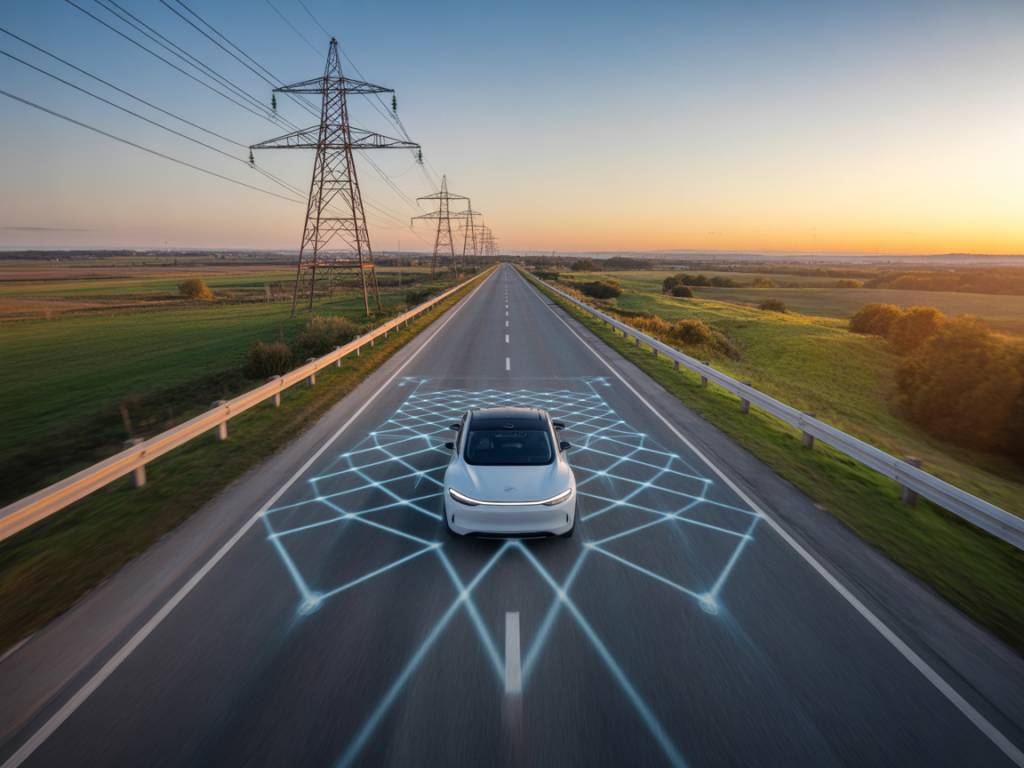
Understanding Vehicle-to-Grid (V2G) Technology
Vehicle-to-Grid (V2G) technology is emerging as one of the most promising tools to support the energy transition and stabilize tomorrow’s power grids. At its core, V2G allows electric vehicles (EVs) not only to draw electricity from the grid but also to feed power back into it when needed. This bidirectional flow transforms EVs from simple consumers of electricity into distributed energy resources that can support grid stability, integrate higher shares of renewable energy, and provide new value streams for drivers, utilities, and system operators.
As electrification accelerates and EV adoption grows, millions of vehicle batteries represent a vast, flexible storage resource. Rather than viewing this as a challenge for the power system, vehicle-to-grid solutions reframe EVs as a strategic asset. V2G technology is therefore increasingly discussed in the context of smart grids, demand response, and grid flexibility services.
How Vehicle-to-Grid Works in Practice
In a standard charging setup, electricity flows unidirectionally from the grid to the vehicle. Vehicle-to-grid technology introduces bidirectional charging infrastructure and smart communication protocols that allow the EV battery to discharge power back to the grid, a building, or a local microgrid. This is coordinated through an energy management system, often operated by an aggregator or a utility.
The basic elements of a V2G system include:
- Bidirectional charger: Hardware capable of both charging the EV and discharging power back to the grid.
- Communication platform: Software that connects the EV, the charger, the grid operator, and sometimes an aggregator or energy service provider.
- Smart grid integration: Grid-side systems that can send price signals, dispatch commands, or flexibility requests based on real-time conditions.
- Participation rules: Market and regulatory frameworks that define how EVs can provide grid services and how revenues are allocated.
In operation, a vehicle-to-grid-enabled car might charge during off-peak hours or when renewable generation is high and cheap—such as during a windy night or a sunny midday. Later, during evening peak demand or when renewable output falls, the same EV can feed a portion of its stored energy back into the system, helping to balance supply and demand.
EVs as Distributed Energy Storage
The rise of electric vehicles effectively adds gigawatt-hours of mobile storage capacity to national power systems. When aggregated, even a small fraction of EV batteries can provide significant balancing capability. For example, a fleet of 100,000 EVs with 60 kWh batteries, contributing just 10% of their capacity, represents 600 MWh of flexible storage. That is enough to smooth short-term fluctuations in renewable output or to reduce peak load on critical grid assets.
This potential is particularly relevant in grids with high penetration of variable renewable energy like wind and solar. As renewable generation ramps up and down with weather conditions, flexibility becomes essential to maintain frequency and voltage within safe limits. Vehicle-to-grid technology allows EVs to participate in:
- Frequency regulation: Rapid adjustments in power export or import to keep system frequency stable.
- Peak shaving: Reducing demand during peak periods by drawing on stored energy in EV batteries.
- Load shifting: Moving consumption to hours when renewable energy is abundant and prices are low.
- Emergency backup: Providing reserve power in case of grid contingencies or local outages.
By behaving like thousands of small, distributed batteries, EVs can complement large-scale stationary storage systems and provide more granular, localized support to distribution networks.
Benefits for Power Grids and System Operators
From a grid operator’s perspective, vehicle-to-grid technology offers several key advantages. The most immediate benefit is enhanced grid flexibility. Instead of investing solely in new peaking plants or traditional grid reinforcement, system operators can rely on flexible demand and distributed storage to manage variability and congestion.
V2G can help to:
- Reduce peak demand: By discharging during peak hours, EV fleets can lower the maximum load on transmission and distribution infrastructure, delaying or avoiding costly upgrades.
- Enhance reliability: Aggregated EVs can participate in ancillary service markets, providing frequency regulation, spinning reserves, and voltage support.
- Improve renewable integration: By absorbing surplus renewable energy during low demand periods, then releasing it when required, EVs reduce curtailment and support higher shares of solar and wind.
- Lower system costs: Flexibility from vehicle-to-grid services can reduce the need for expensive, rarely used fossil-fuel peaking plants.
In smart grid planning, V2G is increasingly viewed as a complementary tool alongside grid-scale batteries, demand response programs, and digital grid management technologies. It fits naturally within a more decentralized power system where generation, storage, and consumption are distributed across millions of devices.
New Value Streams for EV Owners and Fleets
For EV drivers and fleet operators, vehicle-to-grid technology opens the door to new revenue streams and cost savings. Instead of simply paying for electricity to charge their vehicles, participants in V2G programs can be compensated for providing flexibility and grid services.
Potential benefits for EV owners include:
- Monetizing idle time: Most vehicles are parked for the majority of the day. V2G turns this idle time into an economic asset.
- Lower charging costs: Smart charging strategies that combine off-peak charging with V2G discharge during peak can reduce net electricity bills.
- Participation in energy markets: Through aggregators, EV owners may access ancillary service markets and capacity mechanisms traditionally reserved for large energy assets.
- Backup power for homes and businesses: When combined with vehicle-to-home (V2H) or vehicle-to-building (V2B) functionalities, EVs can provide resilience during outages.
Fleet operators—such as bus companies, logistics providers, and car-sharing services—are particularly well positioned. Their vehicles typically follow predictable schedules and return regularly to centralized depots, making coordination easier. For them, V2G can contribute to total cost of ownership reduction and improve the business case for electrification.
Key Technical and Regulatory Challenges
Despite its promise, vehicle-to-grid deployment faces several challenges. On the technical side, bidirectional charging remains more complex and expensive than standard charging. Not all EV models currently support V2G, and interoperability between vehicles, chargers, and grid operators is still evolving. Standardization of communication protocols—such as ISO 15118 and OpenADR—is critical to enable large-scale, manufacturer-agnostic V2G solutions.
Battery degradation is another concern often raised by EV owners. Every charge-discharge cycle contributes to battery wear. However, recent studies suggest that well-managed V2G operation may have a relatively modest impact on battery life, and in some cases, can even optimize battery health by avoiding extended periods at very high or very low states of charge. The economics will depend on careful design of operating strategies and transparent sharing of costs and benefits.
On the regulatory front, many electricity markets and grid codes are not yet fully adapted to distributed, mobile storage assets. Issues include:
- Defining the legal status of EVs as grid resources.
- Clarifying taxation and tariff structures to avoid double-charging for energy flows.
- Allowing aggregators to participate in ancillary service and capacity markets.
- Ensuring data privacy and cybersecurity for connected vehicles and chargers.
Addressing these barriers will require coordinated action from policymakers, regulators, automakers, utilities, and technology providers.
Real-World Vehicle-to-Grid Pilot Projects
Several countries are already testing vehicle-to-grid technology through demonstration projects and early commercial deployments. In Denmark, V2G pilots with commercial fleets have shown how EVs can provide frequency regulation services to the transmission system operator. In the United Kingdom, projects have explored residential V2G with Nissan Leaf vehicles, generating revenue for participants while supporting local grid stability.
In Japan, where resilience is a central concern, V2G and related concepts such as vehicle-to-home are integrated into broader disaster preparedness strategies. EVs can serve as emergency power sources during earthquakes or extreme weather events, reinforcing the role of electric mobility in national energy security.
These pilot programs are generating valuable data on user behavior, technical performance, business models, and regulatory needs. They also illustrate how vehicle-to-grid can be embedded in broader smart grid and energy transition strategies, rather than operating as a standalone technology.
The Role of Smart Charging and Demand Response
Vehicle-to-grid should be seen as part of a spectrum of smart charging solutions. Even without full bidirectional capability, controlled unidirectional charging—often known as “smart charging” or “managed charging”—can already deliver significant benefits. By shifting charging times away from peak periods and aligning them with renewable generation, smart charging acts as a form of demand response.
V2G represents the next step: not only adjusting when EVs consume power, but also how they can provide power back to the grid. Combining these approaches enables highly flexible load management strategies. For instance, during periods of surplus wind power, EVs might charge rapidly, while during times of scarcity, they may delay charging or feed energy back to support the system.
Advanced algorithms, real-time price signals, and predictive analytics will play a crucial role. They will need to consider user mobility needs, battery health, grid constraints, and market conditions, ensuring that the primary function of the EV—mobility—is never compromised.
Outlook for V2G in Tomorrow’s Power Systems
As governments pursue decarbonization objectives and accelerate the phase-out of fossil fuels, power systems must become more flexible, digital, and resilient. Vehicle-to-grid technology aligns closely with these goals. It leverages existing investments in electric mobility, supports higher penetration of renewable energy, and introduces new actors into electricity markets.
The pace of adoption will depend on the convergence of several trends: falling EV costs, wider availability of V2G-compatible vehicles and chargers, maturing smart grid infrastructure, and regulatory frameworks that properly value flexibility services. Collaboration between automotive manufacturers, energy companies, and digital service providers will be central to building scalable and interoperable solutions.
In this evolving landscape, vehicle-to-grid is more than a technical curiosity. It represents a new paradigm in which millions of electric vehicles help stabilize tomorrow’s power grids, transforming drivers and fleet operators into active participants in the energy system. As the technology matures, V2G is likely to play a growing role in ensuring that the clean energy transition is not only low-carbon, but also reliable, affordable, and resilient.




More Stories
10 causes for global warming and their impact on climate action
10 ways to save our earth with renewable energy and green technology
10 effects of climate change on renewable energy, green technology, and sustainable living