
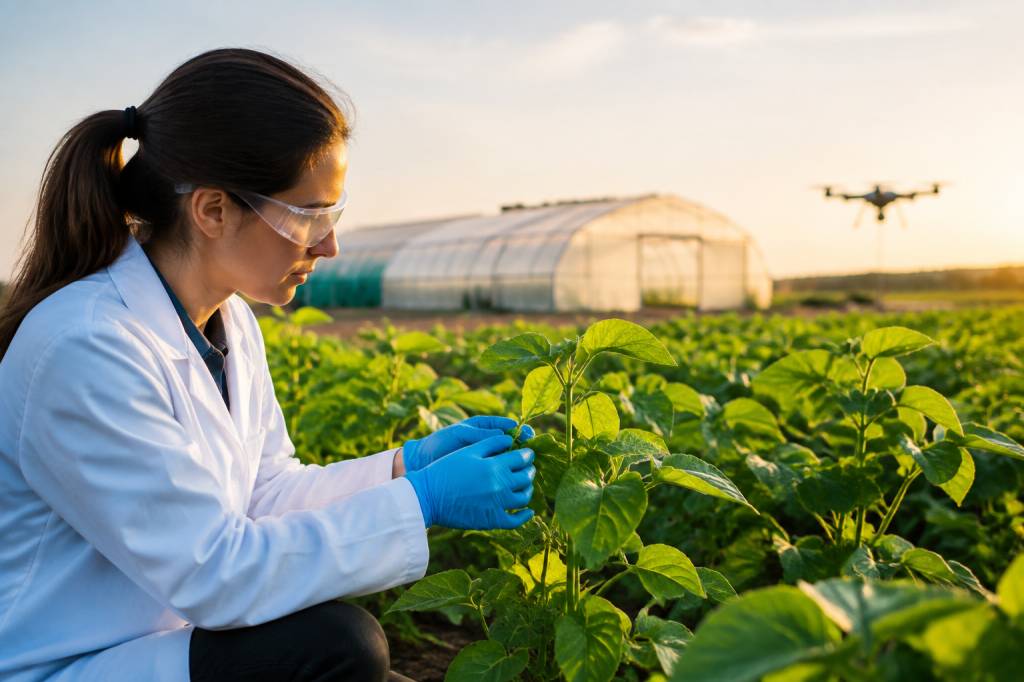
Feeding a growing population while protecting soil, water, biodiversity, and the climate is one of the defining challenges of our time. Agriculture must produce more food, but it must also become more resilient and resource-efficient. This is where biotechnology is making a growing contribution.
From beneficial microorganisms that improve soil health to gene-editing tools that help crops withstand drought, biotechnology is giving farmers new ways to respond to environmental pressures. It is not a silver bullet, and it cannot replace good land management, responsible policies, or local knowledge. However, used carefully, it can become a powerful part of a more sustainable food system.
The central question is not simply whether biotechnology belongs in agriculture. It is how we can use it responsibly, transparently, and fairly to improve food security while reducing agriculture’s environmental footprint.
What does biotechnology mean in agriculture?
Agricultural biotechnology involves using biological knowledge, organisms, cells, or molecular techniques to improve crops, livestock, and farming systems. Some applications are centuries old, while others rely on advanced genetic and laboratory methods.
Farmers have always selected seeds from plants with desirable traits, such as better flavor, larger harvests, or stronger resistance to disease. Modern biotechnology accelerates and refines some of these processes. Scientists can identify specific traits, study how they work, and develop plants or biological products that address particular agricultural challenges.
Today, agricultural biotechnology includes:
- Genetic improvement and gene editing for more resilient crops.
- Biological fertilizers made with beneficial bacteria or fungi.
- Biopesticides derived from naturally occurring organisms.
- Microbial treatments that improve soil fertility and plant growth.
- Animal biotechnology aimed at better health, nutrition, and disease resistance.
- Cell-based and fermentation technologies for alternative proteins.
These technologies are particularly relevant as climate change alters growing conditions. Higher temperatures, irregular rainfall, salinity, new pest pressures, and extreme weather events are already affecting farms in many regions.
Climate-resilient crops for a changing world
Climate change is making traditional farming calendars less predictable. A crop variety that performed well twenty years ago may struggle when heat waves arrive earlier, rainfall becomes concentrated in short storms, or dry periods last longer.
Biotechnology can help develop crops with traits such as drought tolerance, heat resistance, flood tolerance, improved nutrient use, and stronger disease resistance. These characteristics can reduce production losses and help farmers maintain yields under difficult conditions.
Consider drought-tolerant maize. In areas where water availability is increasingly uncertain, a variety that maintains productivity during moderate water stress can protect both food supplies and farm income. It may also reduce the need for emergency irrigation, saving energy and lowering pressure on rivers and aquifers.
Salt-tolerant crops are another promising example. Rising sea levels, poor drainage, and excessive irrigation can cause salt to accumulate in agricultural soils. Developing varieties that can grow in moderately saline conditions could help restore the productivity of land that would otherwise become difficult to cultivate.
Gene editing tools such as CRISPR have attracted attention because they can make precise changes to a plant’s DNA. Instead of introducing a gene from a distant species, researchers may adjust an existing gene to strengthen a natural trait. This precision does not eliminate the need for safety assessments, but it can shorten development timelines and expand the range of traits that scientists can study.
Reducing chemical inputs without reducing productivity
Synthetic fertilizers and pesticides have played an important role in increasing food production. At the same time, their overuse can contribute to water pollution, soil degradation, greenhouse gas emissions, and harm to beneficial organisms.
Biotechnology offers several ways to reduce reliance on these inputs. Microbial fertilizers, often called biofertilizers, use bacteria or fungi that help plants access nutrients. Some microorganisms fix atmospheric nitrogen, while others make phosphorus more available or stimulate root development.
Healthy microbial communities can act like an invisible workforce beneath the soil. They help plants absorb nutrients, improve soil structure, and increase resilience to stress. In practical terms, a farmer may be able to maintain yields while applying less synthetic fertilizer, particularly when biological products are combined with crop rotation, compost, precision agriculture, and soil testing.
Biopesticides provide another pathway. These products may contain microorganisms, plant extracts, or naturally occurring compounds that target specific pests or diseases. Compared with broad-spectrum chemical treatments, some biopesticides can have a smaller impact on non-target species and may break down more quickly in the environment.
However, biological products are not automatically risk-free or universally effective. Their performance can depend on temperature, soil conditions, application timing, and local ecosystems. Farmers need reliable advice, quality products, and practical training rather than unrealistic promises printed on attractive packaging.
Improving soil health through biology
Soil is more than a physical support for crops. It is a living ecosystem containing bacteria, fungi, insects, worms, plant roots, and organic matter. When this ecosystem is damaged by erosion, compaction, pollution, or intensive chemical use, agricultural productivity becomes more fragile.
Biotechnology can support soil restoration by identifying and multiplying microorganisms that perform valuable functions. Mycorrhizal fungi, for example, form partnerships with plant roots. Their extensive networks can help plants access water and nutrients beyond the immediate root zone. In return, the fungi receive energy from the plant.
Other microorganisms can help decompose organic matter, suppress soil-borne diseases, or improve nutrient cycling. Researchers are also developing biological treatments for contaminated soils, using microorganisms capable of breaking down certain pollutants. This process, known as bioremediation, could help rehabilitate land affected by industrial activity or excessive chemical use.
Still, soil biology cannot be packaged as a replacement for good farming practices. No microbial product can compensate for continuous monocropping, severe erosion, or poor water management. Biology works best when supported by reduced tillage, cover crops, diversified rotations, organic matter management, and careful irrigation.
Protecting crops with smarter biological tools
Crop pests and diseases can destroy a significant portion of global food production. Warmer temperatures may also allow certain insects and pathogens to expand into new regions. This creates pressure to protect harvests without increasing chemical use indefinitely.
Biotechnology is helping scientists develop more targeted approaches. Bacillus thuringiensis, commonly known as Bt, is a naturally occurring bacterium that produces proteins toxic to specific insect larvae. These proteins have been used in biological pest control for decades, both as sprays and in certain genetically modified crops.
Other solutions include RNA-based technologies that interfere with the biological functions of a particular pest. These approaches may offer highly specific control, potentially reducing harm to beneficial insects. Researchers are also using genomic tools to understand how pathogens evolve and how plants defend themselves.
Early detection is just as important as treatment. Portable DNA and RNA testing tools can identify plant diseases before symptoms become widespread. For a farmer, detecting an infection early may mean treating a small area instead of spraying an entire field. That saves money, reduces chemical exposure, and limits environmental impact.
Biotechnology and food security
Food security is not only about producing more calories. It also involves access, affordability, nutrition, stability, and the ability of food systems to withstand shocks.
Biotechnology can contribute to food security by improving the reliability and nutritional value of crops. Biofortification is one example. Through conventional breeding or biotechnology, scientists can increase levels of nutrients such as iron, zinc, or vitamin A in staple foods. For communities where dietary diversity is limited, nutrient-enriched crops may help address deficiencies.
Golden Rice is often cited as an example of biofortification because it was developed to produce beta-carotene, which the body can convert into vitamin A. Its history also illustrates an important reality: scientific potential alone is not enough. Public trust, regulatory approval, cultural acceptance, seed access, and transparent communication all influence whether a technology delivers real benefits.
Biotechnology can also reduce food waste. Crops with slower ripening, improved storage qualities, or greater resistance to bruising can remain usable for longer. This matters because food lost after harvest represents wasted land, water, energy, labor, and emissions. Producing more food is useful; preserving more of what has already been produced is often even more efficient.
Alternative proteins and a lower-impact food system
Agricultural biotechnology is expanding beyond fields and livestock farms. Precision fermentation uses microorganisms such as yeast or bacteria to produce specific proteins, enzymes, fats, and other ingredients. This technology can create dairy proteins without raising cows, for example, or produce ingredients for meat alternatives.
Cell-based meat is another developing area. Instead of raising and slaughtering an entire animal, producers cultivate animal cells in controlled environments. The technology is still expensive and energy-intensive, and large-scale production faces technical and regulatory challenges. Its environmental performance will depend on factors such as energy sources, production efficiency, feedstocks, and facility design.
These innovations should not be presented as a universal replacement for traditional agriculture. They are additional tools that may diversify the food system and reduce pressure on land in certain applications. A sustainable food future will probably include a mix of regenerative farming, improved animal systems, plant-based foods, fermentation, and carefully developed cellular technologies.
The energy connection
Biotechnology and energy are closely linked. Agriculture consumes energy through irrigation, machinery, fertilizer production, refrigeration, transportation, and food processing. Nitrogen fertilizer, in particular, requires substantial energy to manufacture.
If biological fertilizers and nitrogen-efficient crops can reduce the amount of synthetic fertilizer required, they may lower both farm emissions and industrial energy demand. Crops that need less irrigation can also reduce the electricity or fuel used for pumping water.
At the same time, biotechnology facilities require energy for laboratories, fermentation tanks, cooling, lighting, and sterilization. Their climate benefits will be stronger when powered by renewable electricity and designed for efficient resource use. A product should not be called sustainable simply because it is biological. Its complete life cycle matters.
This is a useful reminder for every emerging technology: sustainability is measured from production to disposal, not by a single attractive feature.
Responsible innovation and the challenges ahead
Biotechnology raises legitimate questions. Could modified organisms affect ecosystems? Who controls genetic resources and agricultural data? Will small farmers benefit, or will they become dependent on expensive patented products? How can regulators assess technologies that develop faster than existing rules?
These questions deserve serious answers rather than polarized debates. Responsible agricultural biotechnology should include:
- Independent safety and environmental assessments.
- Transparent labeling and accessible public information.
- Long-term monitoring after products reach the market.
- Protection of farmers’ rights and traditional knowledge.
- Affordable access for smallholders and low-income regions.
- Research adapted to local crops, climates, and farming systems.
Farmers should also have choices. Biotechnology must not become a condition for participating in modern agriculture. Conventional breeding, agroecology, organic practices, precision farming, and biological solutions can complement one another. The best approach will vary from one landscape to another.
What the future farm may look like
The farm of the future may combine satellite imagery, soil sensors, autonomous equipment, climate forecasts, beneficial microbes, improved seeds, and renewable energy. A farmer could receive an early warning about disease, apply a biological treatment only where needed, irrigate according to real-time soil data, and select a crop variety adapted to the season’s expected conditions.
This vision is not about replacing farmers with laboratories or algorithms. It is about giving farmers better information and more resilient options. Human experience remains essential because agriculture operates within complex social, ecological, and economic systems.
Biotechnology can help agriculture produce more with fewer resources, protect harvests from climate stress, improve nutrition, and reduce waste. Its greatest value will emerge when it is integrated with healthy soils, responsible water use, renewable energy, biodiversity protection, and fair access to innovation.
The future of food will not be built by one breakthrough alone. It will come from many practical improvements working together—and from ensuring that scientific progress serves both people and the living systems that sustain us.
More Stories
1.5 centigrade: the global climate target shaping renewable energy and climate action
10 advantages of renewable energy for a cleaner and more sustainable future
10 causes for global warming and their impact on climate action